Close Cycle: 11 Days to 4, Before a Financing Event
An illustrative example of a mid-market operator that cut its monthly close from 11 days to 4, improving reporting credibility ahead of a financing event.
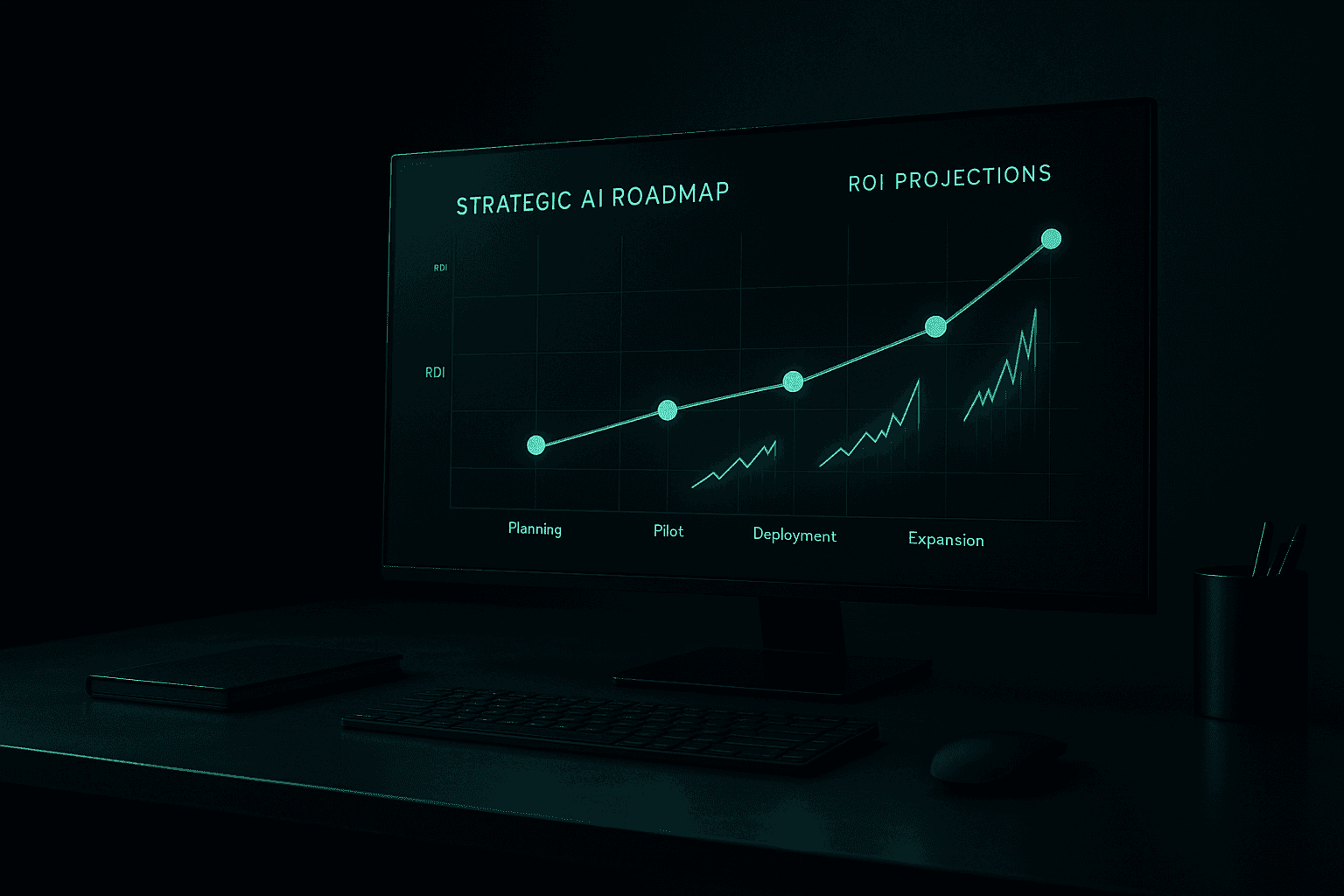
Illustrative example based on typical engagement outcomes. This composite reflects the kind of result a 90-Day AI Operations Sprint is designed to produce for a mid-market operator. It is not a single named client.
The situation
A mid-market services company, roughly $180M in revenue, was carrying an eleven-day monthly close. The finance team spent the first half of every month reconciling accounts across disconnected systems, chasing the same exceptions, and rebuilding the same board packet by hand. Reporting was always late and never quite consistent month to month.
That was a problem on its own. It became urgent because the sponsor was preparing the company for a financing event. A close that takes eleven days and produces inconsistent numbers does not inspire confidence in a data room. The board wanted reporting it could stand behind, and it wanted it before the process started, not after.
The approach
The engagement followed the standard sprint structure. Before any system was built, we set a baseline: eleven days to close, a measured number of finance hours consumed by reconciliation and packet assembly, and the recurring exception types that ate the most time.
From there, the work focused on one workflow, not a finance-wide transformation. We built AI-assisted reconciliation and exception handling around the systems the team already used, automated the assembly of the recurring reporting packet, and documented the new process as an SOP. Adoption was part of the engagement: the controller owned the new process, and the team was trained to run it before we left.
The result
By the close at the end of the engagement, the cycle had moved from eleven days to four. Finance hours spent on reconciliation and packet assembly dropped sharply, freeing the team for review rather than data wrangling. Just as important for the sponsor, the reporting was consistent month over month, with a documented process behind it.
- Close cycle: 11 days to 4
- Reconciliation and packet hours: materially reduced, measured against the kickoff baseline
- Reporting: consistent, documented, and defensible in a data room
- Live and adopted inside 90 days, fixed price
Why this matters for mid-market operators
A faster close is a finance win. A credible, repeatable close ahead of a financing event is a value-creation win. The difference is the before-and-after documentation: a baseline set at kickoff, a measured result at close, and adoption data showing the team is actually running the new process.
That is the evidence your board and leadership can underwrite. And because the model is repeatable, the same approach can run on the next workflow, and the one after that. If you want to see where a result like this would land in your business, book an AI Strategy Briefing.
Get the weekly AI brief.
Read by CIOs and ops leaders. One insight per week.
Related reading
- AI Compliance Automation: Financial Services Case Study [2026]AI compliance automation cut a Chicago wealth management firm's processing time by 89%. See how 26-hour reviews dropped to 2.8 hours with 99.7% accuracy.
- Case Study: How an E-Commerce Retailer Reduced Support Response Time by 73% with AIDiscover how Dooder Digital helped a Chicago e-commerce retailer handle 5x more customer inquiries while reducing response time from 4.2 hours to 67 minutes through AI-powered customer service automation.
- Case Study: How a Chicago Consulting Firm Increased Billable Hours by 34%Discover how Dooder Digital helped a management consulting firm increase billable utilization from 62% to 83% and improve project profitability by 28% through AI-powered resource optimization and intelligent time tracking.