AI Automation Consulting: Where ROI Shows Up First
AI automation consulting works best when it starts with repetitive workflows with visible cost. See where ROI shows up first and how to choose the first process.
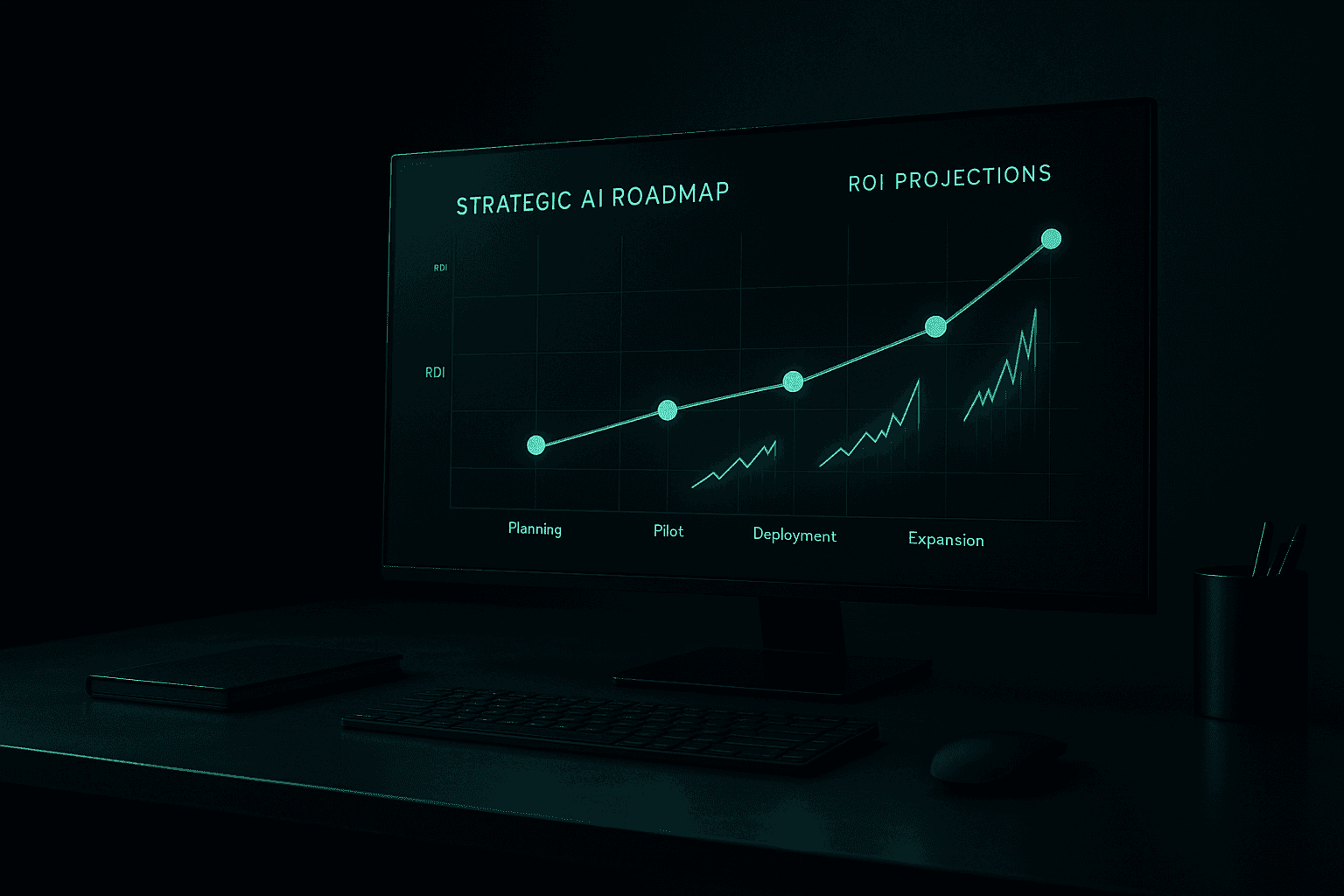
AI automation ROI shows up first in boring, repetitive work — document drag, reporting overhead, approval routing, intake delays, and follow-up. Good automation consulting finds the process with the clearest payoff, fits the automation into daily operations, and gets the team using it fast. Flashy demos rarely deliver the early return.
ROI shows up in boring work.
The best automation wins rarely start with flashy demos. They start in workflows full of repetitive steps, document drag, reporting overhead, approval routing, intake delays, and follow-up work.
Good AI automation consulting Chicago should identify the process with the clearest payoff, fit the automation into daily operations, and get the team using it fast.
What AI automation consulting should find
A strong automation engagement should answer five questions early:
- Which workflow should go first
- What does the current process cost
- Which systems does the workflow touch
- What does adoption look like
- How will the business measure success
Many companies skip these questions and start with software selection. This order creates waste.
The real job is workflow selection.
Where ROI often shows up first
Document-heavy workflows
Examples include:
- compliance review
- invoice handling
- onboarding packets
- internal forms
- document classification and routing
These workflows are strong targets because the work is structured and expensive.
Approval and routing workflows
A lot of teams lose time in repetitive coordination:
- approval chains
- escalations
- status chasing
- handoffs across departments
- follow-up reminders
These workflows create hidden delay even when the work itself is not hard.
Recurring reporting
Recurring reporting is one of the cleanest early wins.
Examples include:
- executive summaries
- client reports
- internal operations updates
- service-level reporting
- cross-system reporting prep
When the same work happens every week or month, automation removes real labor fast.
Onboarding, intake, and follow-up
These workflows create strong ROI because they combine:
- repeated steps
- multiple systems
- user delay
- clear throughput impact
Why repetitive workflows win first
Many organizations want the first AI project to feel strategic.
This instinct leads many teams into weak first bets. The best first workflow usually looks plain from the outside because the economics are strong.
These workflows are:
- frequent
- measurable
- frustrating
- expensive over time
- easier to standardize
This makes them easier to automate and easier to defend in front of leadership.
Common mistakes
Automating a broken process
If the workflow is badly designed, automation speeds up the mess.
Starting with too many workflows
Five weak pilots do less than one strong win.
Buying software before choosing the use case
Tool-first decisions often create shelfware and adoption problems.
Ignoring ownership
If no one owns the workflow after launch, performance slips.
Skipping ROI framing
If leadership cannot see the likely payoff, support weakens fast.
How to choose the first workflow
A strong first target scores well in six areas:
Frequency
Does the work happen often enough to matter
Labor cost
How much team time does it consume now
Delay
Does it slow revenue, onboarding, reporting, or service delivery
Business pain
Do users already want this process fixed
System access
Will the workflow fit into the systems involved without a larger rebuild
Adoption odds
Will the team use the new workflow once it goes live
If a workflow scores well across these areas, it is often a better starting point than a use case with more hype and less operational clarity.
If you need help ranking the shortlist, start with the AI Opportunity Audit.
Why one win matters more than five experiments
Organizations do not need a portfolio of pilots. They need one result leadership trusts.
A narrow first win does four things:
- It proves AI improves a business number
- It builds trust with the operating team
- It makes later budget approval easier
- It shows how to expand into adjacent workflows
This logic is especially relevant in operations-heavy markets like Schaumburg, where back-office complexity and reporting drag create strong first use cases.
What real payoff looks like
A documented Chicago financial services engagement reduced compliance processing time from 26 hours to 2.8 hours per client after workflow automation and document handling changes. Estimated annual savings reached $385K.
Read the case study here.
The best next step
Do not start by asking which AI tool to buy.
Start by asking which workflow repeats often, consumes expensive time, slows the business, and is easiest to measure before and after rollout.
If you want help identifying the strongest first process, start with the AI Opportunity Audit.
Get the weekly AI brief.
Read by CIOs and ops leaders. One insight per week.
Related reading
- AI Implementation Consultant Chicago: What 90 Days Should ProduceAI implementation consultant Chicago buyers trust. See what the first 90 days should produce, where projects fail, and how to pick the first workflow with clear payoff.
- AI Strategy Consulting vs AI Implementation: Which Step Comes FirstAI strategy consulting fits teams with unclear priorities. AI implementation fits teams with one clear workflow. See how to choose the stronger next step.
- Custom AI Implementation vs Off-the-Shelf Tools: Which One FitsOff-the-shelf AI tools fit simple workflows. Custom AI implementation fits cross-functional workflows with heavier system, process, or compliance demands.